













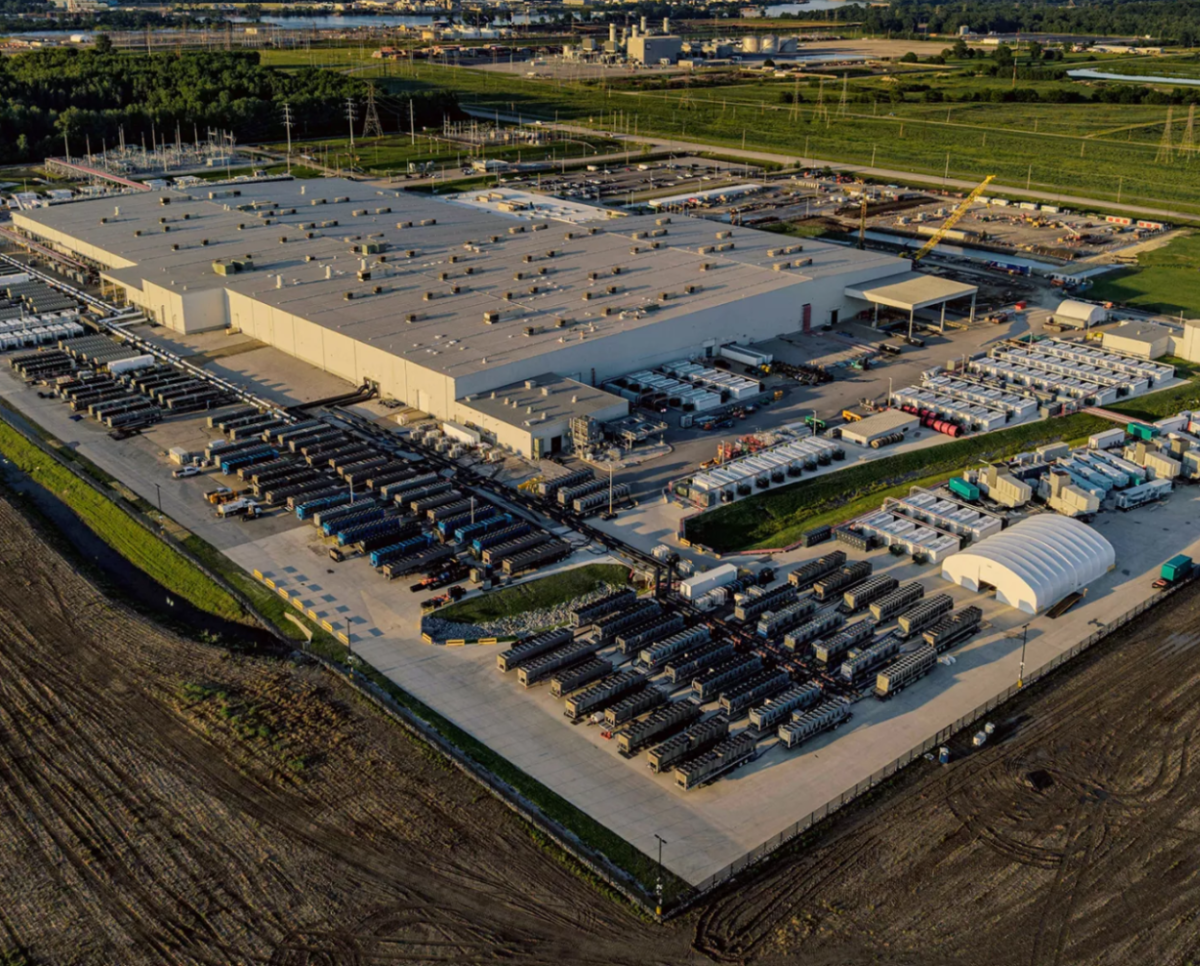
As AI continues to advance, Elon Musk and his company, xAI, have contributed to the growing industry by creating Colossus 1 and Colossus 2, the world’s biggest supercomputers. Both built in Memphis, Tennessee, Colossus 1 began operations in the summer of 2024 after taking only 122 days to make, while Colossus 2 went live in January 2026. Colossus 1 contains over 200,000 GPUs, while Colossus 2 is the first to operate at a gigawatt (GW) scale power capacity. They are used to train LLMs like Grok and test the capabilities of AI. LLMs, or large language models, are AI systems designed to take large amounts of data and generate natural, human-like responses.
NVIDIA, a global tech company, plays a key role in Colossus’ functionality. NVIDIA supplies xAI with Hopper GPUs that run on NVIDIA Spectrum-X™ Ethernet, enabling the supercomputer to compute faster and for the GPUs to communicate with each other. The GPUs are spread across more than 12,500 servers, with 700 watts per GPU, 10 kilowatts per server, and 250 megawatts to power just Colossus 1. Colossus 2 would quadruple the amount of energy required compared to Colossus 1. To ensure the GPUs do not overheat due to the enormous power and heat, xAI installed Boyd’s liquid-cooling technologies to maintain the supercomputers at a constant temperature.
Many people are hopeful about this new facility and believe it could yield significant benefits. Some hope that the supercomputer will support the Memphis economy. “It represents a tremendous opportunity,” Memphis’ mayor, Paul Young, said. “An opportunity for us to take our economy to the next level.” Training large language models would also help make tremendous strides in other fields, such as medicine, robotics, energy, and more.
However, some are concerned with the potential drawbacks of supporting these projects. Because of the immense energy requirements to power the GPUs, the facility is supplied by a nearby natural gas plant with natural gas turbines that emit nitrous oxides and formaldehyde. Although xAI has promised to comply with pollution limits, residents of Memphis have raised concerns about air pollution and potential health issues.
“How do we really know what is coming from these facilities?” Sarah Gladney, who lives in Southern Memphis, said. “They can tell us anything, but how do we really know?” Others are concerned about the billions of dollars needed to improve Colossus, as well as the fact that powering Colossus requires enough electricity to power a hundred thousand homes.
On the other hand, Dr. Marla James, a Union Catholic teacher and advocate for ethical AI use in education, believes the benefits of Colossus could outweigh its environmental costs if used for the right purposes. “AI has extremely great potential in science and medicine,” she comments. “There will be more supercomputers like Colossus.” However, she noted that AI still needs to be fact-checked and that it works best when people question it rather than taking it at face value. She also stated that economic competition can stifle companies’ ability to advance science and hopes that companies will shift their focus to benefit society more.
As the pros and cons of supercomputers like Colossus are discussed, it is clear that society will continue to advance with AI. Already, Elon has recently announced that he will build a $20 billion data center in Mississippi aimed at doubling his computing power to 2 GW. This will be his third data center, which he will call “MACROHARDRR,” and it is expected to begin its operations in February. All eyes are on Elon’s latest AI venture as he pushes toward a brand-new, AI-filled era. According to the technology innovation executive, Tia White, “AI is here. It’s not the future—it’s now.”